Pages

Wednesday, June 20, 2018

1,415 Miles Away...

At the beginning of my spring semester at Phoenix College, a friend of mine, Sam,
told me she was applying to summer internships and advised that I should, too.
After hearing this, I took it to my advantage and applied to about 7 summer
programs ranging from The University of San Francisco to The University of Iowa
(U of I). Out of the 7 internships I applied for, the first 4 schools rejected my
application. As one would imagine, I was beginning to lose hope. However, after
a week or so, I received a call from U of I telling me that I was accepted. From
the time of the call (March) to May, I was looking for a mentor, filling out
paperwork and practically preparing myself for the 8-week program.

Today, I am 1,415 miles away from home and this is the first time I am completely
on my own. Nonetheless, I have been in Iowa City, IA for 3 weeks and it has been
a great experience so far. The wonderful people, my research project and beautiful
campus have made my stay worthwhile. In my next post, I will be sure to blog about
my research once I fully understand it and am able to explain it!

Figure 1. O'Hare International Airport located in Chicago, IL.
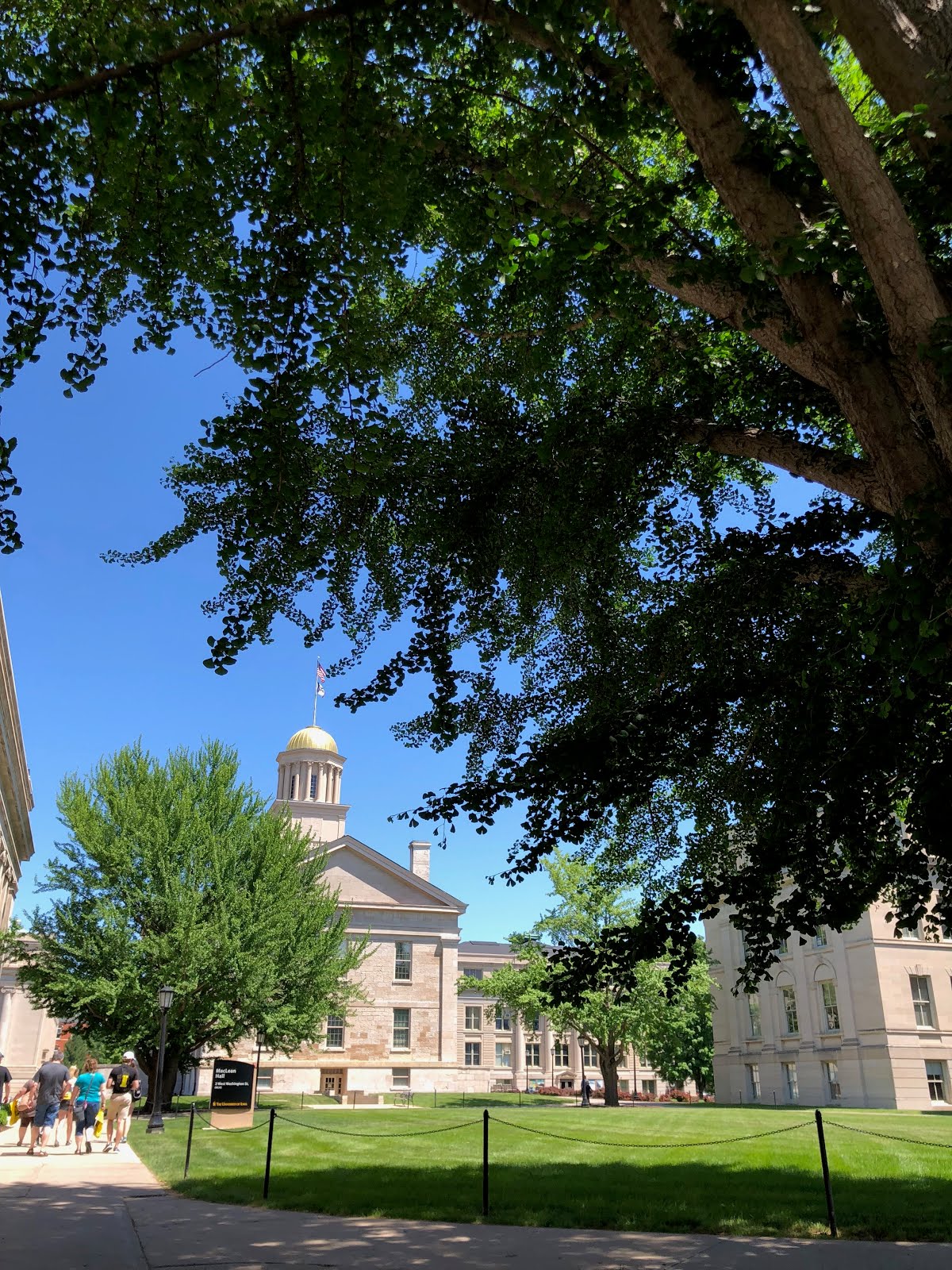
Figure 2. The University of Iowa campus. The building that is shown is known as the Old Capitol.
Figure 3. A closer look at The University of Iowa's Old Capitol
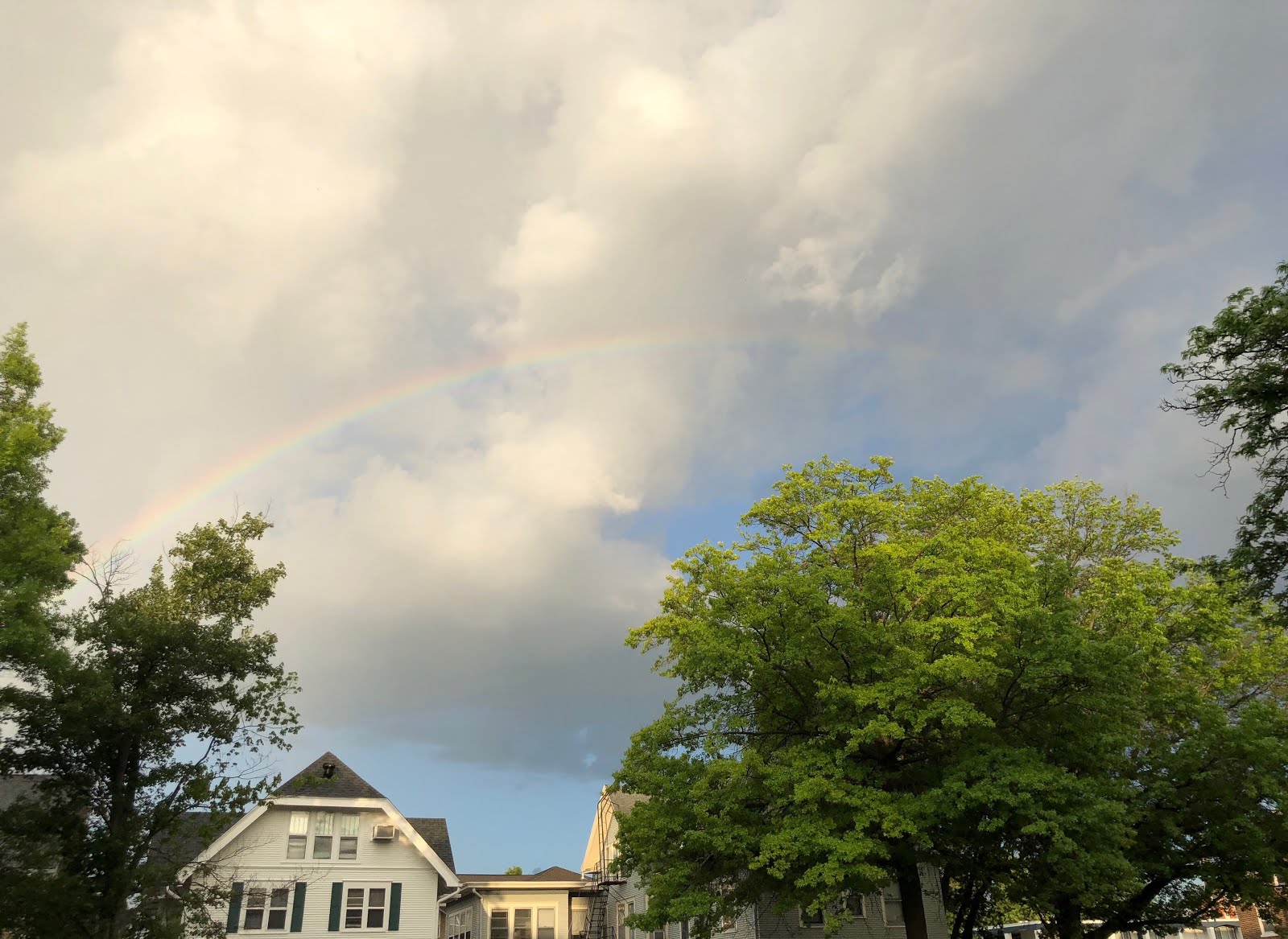
Figure 4. A rainbow outside of my dorm is formed after a day of rain.
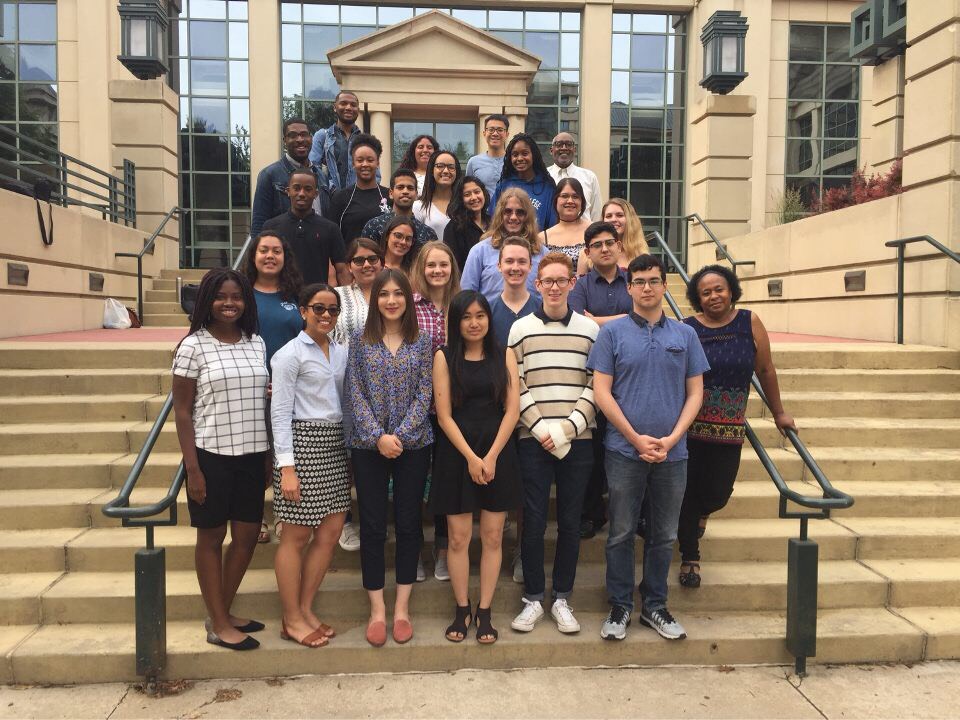
Figure 5. The 2018 summer interns at The University of Iowa's SROP (Summer Research Opportunity Program).

Thursday, May 3, 2018

Onto the Next Experience...

This was the final week I was a STEM/ TRAIN intern at Phoenix College. During my last week, I did a poster presentation at Metro Tech High School. To be honest, I wasn’t expecting many people to attend since teachers didn’t show up for work due to the RedForEd protests. However, to my surprise, nursing students, along with other faculty, showed up to see our presentations. As a result, the turn out at Metro Tech was great: there was an audience, the food was delicious and everyone seemed to have a good time. I am so grateful for having the opportunity to conduct research at Phoenix College but it doesn’t end here… I will continue at ASU West next semester! I am excited for what the future holds and I wish my fellow interns the best of luck during their journey called life.


Figure 1. The amazing people I met and had the privilege to work with. I would like to thank each and everyone of them for having my best interest in mind and contributing to my wellbeing in one way or another. The order of the people from top left to top right is: Amanda Chapman, Joshua James, Mario Diaz, David Ortiz Leon, Luisa Zamora, RJ Mabry, Ibrahim Ibrahim, Brenda Arvizu (me) and Matt Haberkorn. From the bottom left to the bottom right is: Samantha Gonzalez Faltermeier, Rolanda Bell, Cathy De Veyra and Jasmine Patricio. Again, to each person, thank you for being there for me.

Thursday, April 26, 2018

Exciting News

I presented at the ASU West Symposium and ANAS Conference last week. Even though ASU West Symposium was quite slow, it did prepare my mind for the next day: ANAS Conference! I was so excited to travel to Las Vegas for this presentation. I had such a great time with fellow interns and mentor as we explored downtown Las Vegas and the University of Nevada. The poster presentation went well, even though I hardly had anyone at my poster (very sad). All in all, I am much more confident presenting my research at Metro Tech High School next week since I have done so twice.

Figure 1. Sharing my research about unknown bacteria in creosote bushes at the ASU West Symposium.
Figure 2. Presenting my research project at the ANAS Conference at the University of Nevada.

Tuesday, April 17, 2018

Final Poster

The semester is coming to an end and I forgot to mention my results for this research project. After looking at our data, the rural group had twice as many bacterial groups compared to the urban. In addition, the average number of Colony Forming Units (CFU) of the urban samples differed by about 70% (Figure 1). However, there is no significant statistical difference between bacterial species in urban and rural areas. More research and samples will need to be gathered in order to determine a statistical difference between the two groups. Other than that, I am content with my poster (Figure 2) and am excited to present at the University of Nevada! I wish my fellow interns the best of luck during their presentations and I hope we have a fun, safe trip!

Figure 1. The rural samples have a greater number of CFUs vs. the urban group and a slightly higher group diversity (2 more groups than urban).
Figure 2. Final poster for the Spring 2018 research project. 


Thursday, April 12, 2018

Semi-Finished Poster

I seriously enjoy working on anything that involves presentations! I love making posters unique, nice to look at and easy to read. I’ve mentioned this before but I think this has to do with my past experience with graphic design. I definitely paid close attention towards this poster when it came to color, font, text size and text placement. (Figure 1). Unfortunately, I am not too sure about the color because it looks very similar to last year’s and I wanted to switch it up. Also, the placement of the results has not convinced me. I will continue editing and will post the final product!
Figure 1. My 2018 research poster (that may still need corrections).

Thursday, April 5, 2018

Slow Weeks

To be honest, for the last couple of weeks, I have had difficulty writing blog posts about my research. I have not been performing DNA extraction since the first 2 extractions because they had similar results. Also, I am unable to perform PCR because I do not have the PCR primers. The primers (27F/1492R, V3F/V3R, V6F/V6R) were ordered this week and should be here in a couple of weeks. Once they arrive, I will then be able to perform PCR, continue my research and hopefully identify the unknown bacteria. In the meantime, I have been editing my research poster to present at the Arizona-Nevada Academy Conference on April 21, 2018.

Figure 1. The Arizona-Nevada Academy of Science and the Arizona/ Southern Nevada Branch of the American Society of Microbiology will host the 62nd meeting at the University of Las Vegas ("Joint Science...", n.d.). 

Joint Science and Mathematics Meeting. (n.d.). Retrieved April 05, 2018, from https://www.aznvas.org/meeting/details/

Thursday, March 29, 2018

Possible PCR Primers

I was able to narrow possible PCR primers down to about 3 pairs. It turns out, I do
not have to necessarily make my own primers, I can use primers that have already
been created to test them out. With this in mind, after researching universal primers,
I have decided to use a pair of PCR primers from last semester and 2 new ones. The
ones from last semester were 27F and 1492R. The primers I want to test are V3F,
V3R, V6F and V6R. Each primer has a specific sequence that will be replicated and
it can be seen in Figure 1. I found it interesting that the new primers have lowercase
letters in their sequence. After researching why this could be, thinking it could have
possibly been a typo, I found that lowercase letters can mean “low-complexity or
repetitive elements” (“Legend: Fasta”, n.d.).

Figure 1. The possible PCR primers that I plan to use during PCR. There are 6 in total, equaling 3 pairs. The sequences are listed next to each one starting from 5' and ending at 3'. 

Legend: Fasta. (n.d.). Retrieved March 30, 2018, from
https://www.ncbi.nlm.nih.gov/SNP/snp_legend.cgi?legend=fasta
Chakravorty, S., Helb, D., Burday, M., Connell, N., & Alland, D. (2007). A detailed analysis of 16S ribosomal RNA gene segments for the diagnosis of pathogenic bacteria. Journal of Microbiological Methods, 69(2), 330-339. https://doi.org/10.1016/j.mimet.2007.02.005