Pages

Friday, April 19, 2019

Donating to Children With Hair Loss


Over the last few years that I’ve been in college, I enjoyed assignments that pertained to my goals. Reason being that I already had goals in mind so these assignments were natural and easy. What I am now realizing is that I’m glad I always had goals in mind. Sure, I didn’t write them down or make a vision board but I knew where I wanted to go. Turns out, you can check yourself by writing down goals in a SMART manner. No, I don’t mean there’s a stupid or smart way... SMART is an acronym for:
Specific
Measurable
Attainable
Realistic
Time-bound
Of course, there are other words that can be used for the acronym such as Significant, Motivating and so on. So how exactly do SMART goals work? Well, if there’s a goal that you may have in mind, you use that to break it into the 5 categories. You ask yourself questions like “how will I know when I’ve reached my goal?”, “what will I do to get to my goal?”, etc. That being said, I recently used this method on a personal goal of mine: donating my hair to Children With Hair Loss (CWHL). Listed below is the SMART method I applied.

S- I want to be able to put a smile on a child’s face. Everyday, people get haircuts and most often then not, it’s thrown away. I want to take advantage of the hair on my head and give it to someone who is struggling and may benefit from it. There are organizations that are dedicated to creating wigs for children, one of which is CWHL. They make wigs and give them to children for free. This is an organization I want to support because I appreciate what they do and I love the fact that they provide their services to families at no charge.
M- Hair is 8 inches or longer (the length I will donate).
A- CWHL prefers hair that is healthy and not treated. From the time I started my goal, I have not damaged my hair by dying it and limited heat exposure (straightening/ curling). I could also start taking vitamins that will help my hair grow faster and healthier.
R- I rarely cut my hair so growing it is no problem.
T- Hair takes awhile to grow (especially mine)! I’ve been growing my hair out for about a year now and I still have more to go. I hope to have my hair down to my middle/ lower back by the time I donate it (1-1.5 years from now).

As I’ve mentioned before, using this method helped me determine if I was taking the right steps toward my goal. I encourage you all to do the same! :)

Figure 1. The logo for Children With Hair Loss, a non-profit organization dedicated to creating and donating wigs to children with diseases that affect their hair ("Donate Your Hair", n.d.). 
Citation
“Donate Your Hair.” Children with Hair Loss, https://childrenwithhairloss.us/donate/donate-your-hair/.

Thursday, April 11, 2019

Community College Presentation


When it comes to creating PowerPoints, I absolutely love it. I put so much detail into the spacing between words and pictures, font size or the lining of pictures. Yes, I am very picky when it comes to PowerPoints and presentations. Recently, I’ve been preparing one for my presentation at South Mountain Community College (SMCC) tomorrow (April 12th). Luckily, I won’t be the only one presenting; other TRAIN students will be there to share their own experiences, research and/or advice.
For my presentation, I will talk about summer internships and go into detail as to what to look for and why they’re beneficial. At the end, I hope I’m able to convince students to apply to them. I chose this topic because my summer internship at the University of Iowa made me want to inform others about such opportunities. Before I applied, I wasn’t aware of these internships. Looking back, if I could help someone have the same (if not better) experience than me, why not share it?
During our TRAIN class yesterday, April 10th, we practiced our presentations to help us prepare for tomorrow. After seeing everyone present, I can’t wait until the real presentations! I hope students enjoy what we share and are able to benefit from it. :)


Figure 1. Logo of South Mountain Community College. TRAIN scholars from ASU West and I will be sharing our stories and advice to attending students ("Brand Guidelines", n.d.). 
Citation

“Brand Guidelines.” Maricopa Community Colleges, https://www.maricopa.edu/about/brand-guidelines

Thursday, February 7, 2019

What’s Your Challenge?

In the TRAIN course, we recently began discussing Mindsets by Carol Dweck. In this book, she illustrates the differences between a growth and fixed mindset. For those of you who may not know, a growth mindset is flexible when faced with challenges while a fixed mindset is “stubborn”. This is a very generic definition of the two and the book goes into depth about the two. In order to tie the book to the class, we looked at strategies used in previous experiences and how they can be incorporated into a new learning challenge.
One of my accomplishments was becoming a researcher. Going back to the day I found out about S-STEM, I had no idea what internships were but I went for it anyway. Today, I’ve learned so much from taking that step forward and getting out of my comfort zone (Strategy #1). Once I became comfortable at Phoenix College, not only did I apply for internships around Arizona but also the country. In addition, repetitive practice and LOTS of patience helped me become a better researcher (Strategy #2). There were instances where data wouldn’t make sense but I couldn’t give up that easily. I had to push through to try and answer my hypothesis. Scientific research is also very hands-on and that worked perfectly for me. I learn best when I use my hands because it actually sticks in my mind (Strategy #3). Last but not least, asking questions was crucial (Strategy #4)! There were times where I would annoy MYSELF because of how many times I asked the same question over and over.
So what’s my new learning challenge? It’s to learn and become better at car-related areas. In my case, I want to work on parallel parking and basic car terminology.
First and foremost, parallel parking? I don’t know her; I try to avoid her. However, one day I couldn’t. I was running late to my class and there were no available parking spots in my usual lot... but there was ONE. That one and only spot along the curb. As I’m pulling up to it, I’m nervous and frantic because 1. I had cars behind me and 2. I hadn’t parallel parked since my driver’s license test (2 years ago). After turning my steering wheel about a thousand times and switching between drive and reverse, I was able to barely stay within the box. I refuse to go through that again so I’ve made it a goal to become better. Just like I did to become a researcher, I need to get out of my comfort zone and practice (Strategy #1 and #2). I’m going to deliberately put myself in situations where I have to parallel park because, as the saying goes, practice makes perfect.
Recently, I had to get a few things fixed in my car. So, when I received the call from the mechanic about fixing the “bushings”, I acted like I knew what he was talking about, told him to go ahead and hung up. As soon as I hung up, I realized I had no idea what he was doing to my car. I immediately called him back and asked him question after question (Strategy #4). After he explained it to me, I repeated it to him to make sure I understood. Now, I’m not saying I’m going to become Mechanic Brenda but I use my car everyday, I should at least know a few things about it.
Before this activity, I didn’t think about approaching challenges the same way I achieved accomplishments. That being said, I’ll leave you with this: what’s your next challenge and what strategies will you use to conquer it?
Figure 1. An illustration depicting the differences between a growth and fixed mindset ("HandTao Growth... Poster, 2019).
Citations:

Dweck, Carol S. Mindset the New Psychology of Success. Ballantine Books, 2016.
“HandTao Growth... Poster.” Amazon, Amazon, 2019,
www.amazon.com/HandTao-Growth mindset-Artwork-
Decorations/dp/B07G75F3X7.

Friday, November 30, 2018

A Little Piece of Advice

Before I transferred to ASU, I made sure I was taking classes I needed for my major and research certificate. While at Phoenix College, I had the idea that a research certificate was required for the TRAIN scholarship. So, with that in mind, I had talked to an advisor and everything seemed to check out. I was taking Genetics, Statistics, Sign Language and IAS (a required transfer class). I thought I was on the right track but that changed half way into the semester. It was Halloween and this was the last day to withdraw from any class. I was doing horrible in Statistics (below passing horrible). I went to every class and took notes but that was a class where I understood in class but as soon as I walked out or took a test, I forgot everything. That class was not it but I had to take it for my scholarship (or so I thought). That day, I had to consider whether I should withdraw and take it next year or continue with it (which would have been a dread). I didn’t know what to do so I reached out to Dr. Hackney Price and Dr. Marshall. After explaining my situation, they gave me advice and I decided to withdraw from the class. I also learned that the research certificate was NOT required for the scholarship (hallelujah)! Moral of the story: don’t be afraid to quadruple check your work with various and different people, even if you think you’re done. It might seem annoying or repetitive but hey, this is your education. I thought I had my classes in check but it turns out I didn’t. If I could go back and change that, I would. I wasted my time on a class I didn’t need and I could’ve used that time for a class I would’ve enjoyed. Also, don’t be afraid to ask for advice. Faculty is there to help YOU! At the end of the day, they are more knowledgeable and experienced so asking them doesn’t hurt you or them. All in all, I will definitely continue to use this advice and I hope it was helpful!

Figure 1. My reaction when I found out I could've saved myself the stress, Friday night homework and a 1-hour class 3 times a week ("Are you kidding me Template", n.d.). Save yourself from this disappointment and follow my advice, please.

Citation

Are you kidding me Template. (n.d.). Retrieved from https://imgflip.com/memetemplate/64537068/Are-you-kidding-me

Friday, October 26, 2018

Interview with Dr. Jennifer Hackney Price

This semester, as some may know, I have been interning in Dr. Jennifer Hackney
Price’s lab. Even though research has been slow (our virgin flies died after
collecting them for 2 weeks), I have learned how to identify flies and the
genetics behind the project. Dr. Hackney Price is an amazing mentor and I truly
cannot express how happy I am to be in her lab. With this in mind, I interviewed
her to see what her job was like.


Me: What is the best thing you like about being a professor?


Jennifer Hackney Price: Interacting with the students. It’s been fun to do
interactions with them in a lab, which I get geeked out about anyways,
because folks bring such good energy and interesting ideas.


Me: Is it because you like helping or the personalities? What about the
students makes it fun?


Hackney Price: I think a little bit of both. Probably more of the
personalities because undergraduates come in with new ideas and they
haven’t been exposed to different techniques and fields. Everything they
come with is so brand new. Especially in lab, you guys come into lab
with all these crazy ideas and it’s like ‘wow, I never would’ve thought of
that! Let’s do it and see what happens!’, which is fun. In the classroom,
seeing the A-HA moments when it finally clicks and I’m just like ‘YES!’.


Me: [laughs] That’s nice, so what about the worst?


Hackney Price: [exhales] Can I say the same answer? [Laughs] As
excited as I get working with undergrads, you guys can be the most
frustrating group of people to work with. There’s been times when I’m
teaching and I see students that I know can do such a great job and then
they won’t show up to class, aren’t taking notes or don’t do the work. It
drives me absolutely batty because I know they can pass the class with
flying colors. I wouldn’t say it’s the worst thing but it is frustrating. The
other part is the flip side. There are students who pour their heart into
classes, show up to office hours, I teach them in a number of different
ways and encourage them but if it doesn’t click, there’s nothing you can
do. That’s a tough pill to swallow.


Me: A disappointment for sure. Why did you decide to enter your field?


Hackney Price: I’ve always loved science. I’ve always been a lab rat.
I’ve always been the science nerd. I remember, as a kid, I had a rock
collection and every rock was amazing. I’d show my parents my rocks
and they were so annoyed with me, carrying around my pocket-loads of
rocks. It’s always kind of has been who I was, I always wanted to figure
out what’s going on, how stuff works. I suppose it was in my genes.


Me: I was about to say that it was in your DNA [laughs]. With that,
what is the most surprising thing about your field, to you?


Hackney Price: How open the scientific community is. I’ve had so
many people share information with me that wasn’t published. People
are willing to share information, supplies and reagents to help move the
field along. That kind of sense of community is something I never even
thought about. For developmental biology, I have found that everybody is
helping each other out.


Me: That’s interesting to know because I thought the scientific community
would be competitive like ‘who’s going to do the next big thing?’ or
‘who’s going to cure cancer?’.


Hackney Price: Don’t get me wrong, some fields are more competitive
than others. In the fly community, there are a few notorious labs that are
really hard to work with. There’s a lot of variation but just in general,
I think folks who got into science did it because they want to know what’s
going on and the only way to do that is to work with each other.

Through this interview, I found out more about her and the way she thinks. I
hope some of you were able to capture her honesty and humor. Until next time!


Figure 1. The developmental process of Drosophila melanogaster a.k.a fruit fly ("Invertebrate development: Drosophila", n.d.). Dr. Hackney Price's lab studies the genetics of these flies to better understand human genetics (the genes of these flies are closely related to those of humans).

Citations:
Invertebrate development: Drosophila. (n.d.). Retrieved October 27, 2018, from Overview of development website: http://biology.kenyon.edu/courses/biol114/Chap12/Chapter_12b.html

Friday, September 28, 2018

Feeling Comfortable

I don’t usually drink coffee but I wanted to try a new drink from Starbucks. I ordered a tall (aka short) Cacao Protein Blended Cold Brew. It sounded fancy and good so I didn’t see a reason why not to order it… until the barista looked at me confused. He asked me, “are you sure you want that one?” After explaining to him that I usually go for sweet drinks, he told me that I probably won't like it. However, he assured me in the case that I don’t like it, he’ll make me a new one for free. Honestly, I wouldn't lose anything so I went with it. When I picked up my fancy drink, I took one sip and it was one of the most disgusting things I have ever tasted! The barista saw the face I made, laughed and began to make a double chocolate chip frappe for me. Anyway, this could have easily happened at any other Starbucks but that’s not where I’m headed. The staff here, at every angle, is welcoming, on your side and eager to help. Another instance I had was meeting Dr. Jennifer Hackney-Price. Before I transferred to ASU West, I had briefly met her at a STEM Open House and I immediately liked her. She is an enthusiastic, kind, intelligent and awesome person that I am grateful to know. A couple of weeks ago, we had a one-on-one conversation about her career and she gave me genuine advice. She has also helped me throughout my project and reassured me that it’s okay to make mistakes. I truly appreciate her because she doesn’t tell me she cares, she shows me. She is someone who has made an impact in my life and I have known her for less than 4 months! Now, that’s not to say she is the only one who cares for her students, there are others who are as happy to help. A few others that I can think of are Pamela Marshall and Jennifer Broatch. With that said, the people (students, professors, staff, etc.) on West campus are so welcoming, assuring and reliable. Since I started, I have not had a bad experience with anyone. Honestly, I feel welcomed here and I am happy to say that I am a part of ASU!
Figure 1. The entrance of Arizona State University West Campus.

Figure 2. A water fountain located outside the University Center Building.

Wednesday, June 20, 2018

1,415 Miles Away...

At the beginning of my spring semester at Phoenix College, a friend of mine, Sam,
told me she was applying to summer internships and advised that I should, too.
After hearing this, I took it to my advantage and applied to about 7 summer
programs ranging from The University of San Francisco to The University of Iowa
(U of I). Out of the 7 internships I applied for, the first 4 schools rejected my
application. As one would imagine, I was beginning to lose hope. However, after
a week or so, I received a call from U of I telling me that I was accepted. From
the time of the call (March) to May, I was looking for a mentor, filling out
paperwork and practically preparing myself for the 8-week program.

Today, I am 1,415 miles away from home and this is the first time I am completely
on my own. Nonetheless, I have been in Iowa City, IA for 3 weeks and it has been
a great experience so far. The wonderful people, my research project and beautiful
campus have made my stay worthwhile. In my next post, I will be sure to blog about
my research once I fully understand it and am able to explain it!

Figure 1. O'Hare International Airport located in Chicago, IL.
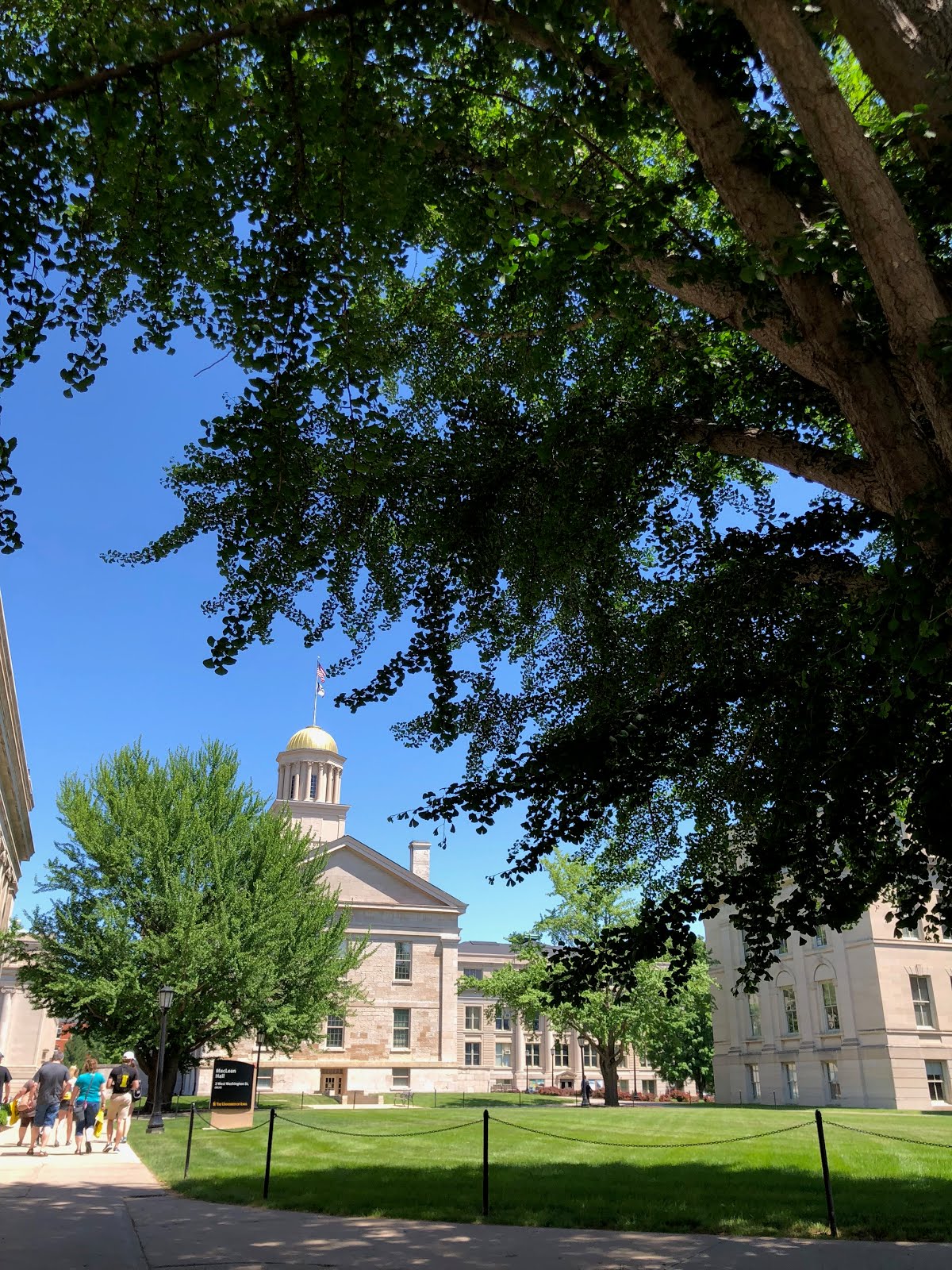
Figure 2. The University of Iowa campus. The building that is shown is known as the Old Capitol.
Figure 3. A closer look at The University of Iowa's Old Capitol
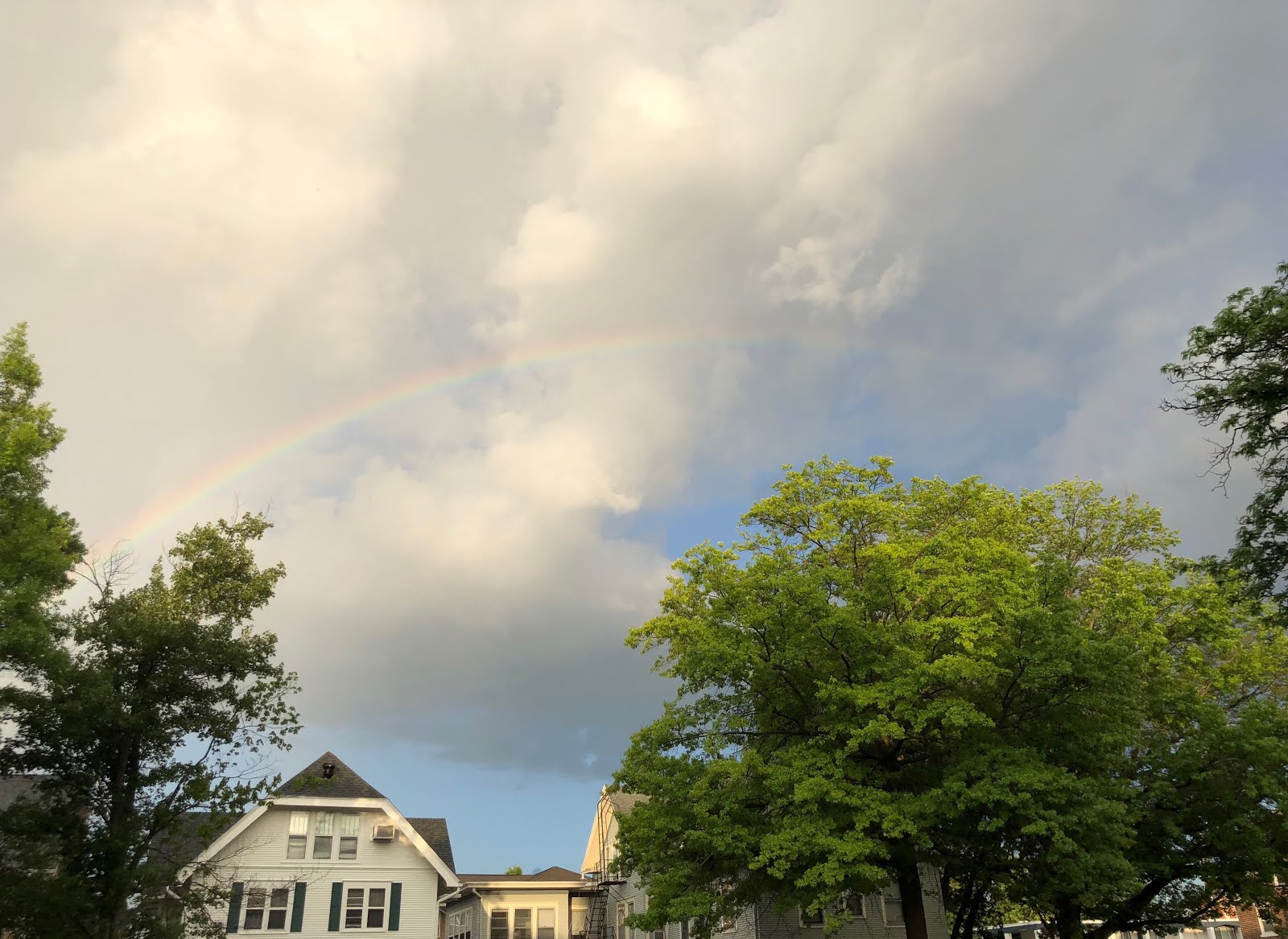
Figure 4. A rainbow outside of my dorm is formed after a day of rain.
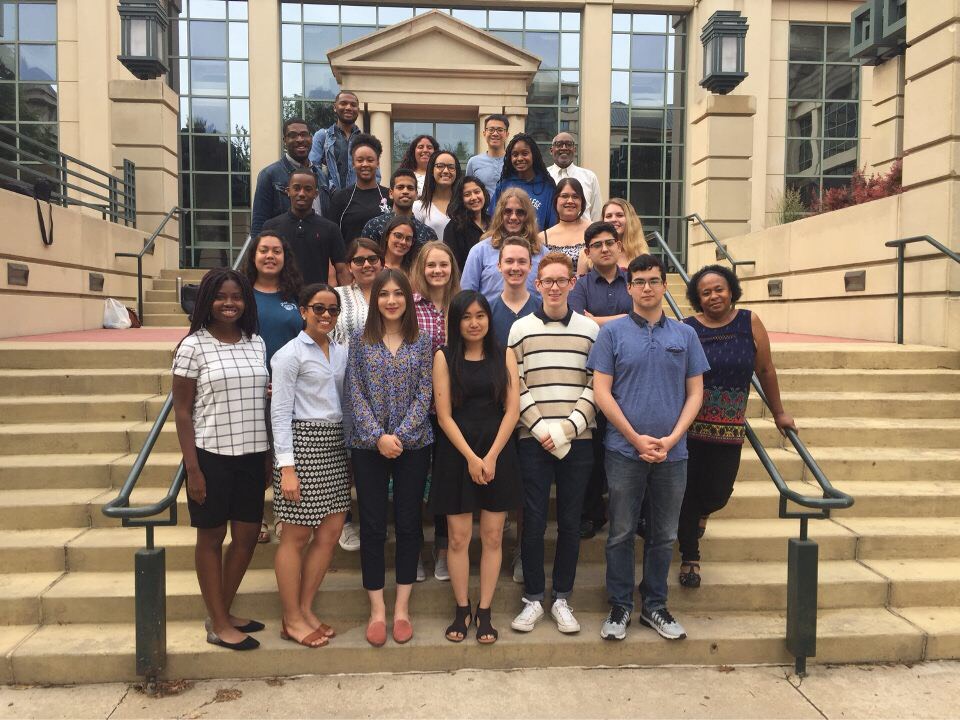
Figure 5. The 2018 summer interns at The University of Iowa's SROP (Summer Research Opportunity Program).